
Learn by operating
The lessons that stayed came from provisioning a VPC, applying a migration, tracing proxy failures and reading logs on a running host.

GautamMohali, Punjab, India
About
I design, build, and document cloud infrastructure across AWS and Linux, with hands-on experience operating live application environments using Nginx, PM2, and PostgreSQL. I focus on the complete infrastructure lifecycle—from DNS, networking, and security boundaries to application processes, data, logging, monitoring, and recovery decisions—with an emphasis on secure, scalable, and cost-effective architecture.
I started with networking fundamentals, then completed cybersecurity training and moved into Linux administration. That path shapes how I approach cloud infrastructure: understand the route, identity boundary, process and logs before changing a system.
At MartialXPro, I work across the Node.js and Express application, PostgreSQL data model and a single-host Ubuntu deployment behind Nginx. It provides hands-on experience with the complete path from application behaviour to production operations.
My AWS work is currently self-directed and lab-based. I have configured IAM, EC2, S3, a custom VPC, CloudWatch, CloudTrail, SNS and EventBridge, and documented the routing, permission and alerting failures behind the results.
The lessons that stayed came from provisioning a VPC, applying a migration, tracing proxy failures and reading logs on a running host.
Networking, then security, then Linux, then the application. When something fails in production, that order is usually how I find it.
Schema to endpoint to server to DNS. I'd rather understand the full route a request takes than be fast in one layer of it.
Each area reflects implemented work or hands-on labs. Current study remains labelled separately.

Currently learning: Docker · Terraform · Kubernetes
Infrastructure work
Three case studies show what I configured, operated and learned, with hands-on labs, current production and planned architecture clearly separated.

A production tournament platform I co-founded and helped design, build and deploy. The case study traces the Node.js and Express application, relational data model and single-host Ubuntu deployment behind it.
System route
Current production is separated from the proposed AWS direction.
Ubuntu host boundary
A deliberately small operational surface while the platform is at its current scale.
AWS VPC boundary
A proposed direction informed by hands-on AWS labs; final service choices and data placement remain future engineering work.

Configured IAM, EC2, S3, a custom VPC, CloudWatch, CloudTrail, EventBridge and SNS in an AWS Free Tier account. The case study records the configuration work and the failures that clarified it.

Administering the Ubuntu host for MartialXPro: Nginx reverse proxying, PM2 process supervision, SSH access, file permissions, environment configuration and production diagnostics.
Networking and cybersecurity training led to Linux operations, self-directed AWS labs and running MartialXPro on one Ubuntu host.
Learned TCP/IP, routing and switching, DNS, HTTP/HTTPS, VPNs and subnetting as the foundation for infrastructure work.
Completed the CEHP, C|NPT - Certified Network Penetration Testing, and WAPT courses through Indian Institute of Cyber Security, in association with Indian Cyber Security Solutions.
Learned the operating system that everything else would end up running on. Services, permissions, logs, SSH.
Configured IAM, EC2, a custom VPC, S3, CloudWatch, CloudTrail, SNS and EventBridge in an AWS Free Tier account, then documented the routing, permission and alerting failures encountered along the way.
Took MartialXPro from an empty schema to a live system on one Ubuntu host behind Nginx, with the Node.js service supervised by PM2 and PostgreSQL managed through Prisma.
Experience
MartialXPro
Education
D.A.V. College, Bathinda
2020 - 2022
AWS certified, with three cybersecurity course-completion certificates supporting my cloud and security foundation.

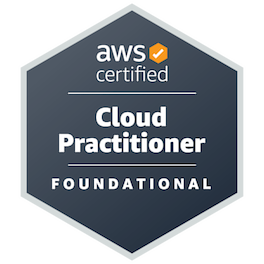
Certification earned
Amazon Web Services
Issued
Credential ID: fe35423b66ec46029be838508c8f5d9c
View certificate (PDF opens in a new tab)Course completion
Indian Institute of Cyber Security
In association with Indian Cyber Security Solutions
Course completion
Indian Institute of Cyber Security
In association with Indian Cyber Security Solutions
Course completion
Indian Institute of Cyber Security
In association with Indian Cyber Security Solutions
Contact
Available for cloud and infrastructure work
I'm interested in roles involving AWS, Linux, networking, deployment and infrastructure operations. Email is the fastest way to reach me.
Direct line
gautamdem@gmail.comFor a role or project discussion, email is the quickest way to reach me.
A useful first note
A little context helps: the role or project, where the team works and when you would like to start a conversation.